Can You Take Allergy Medication While Pregnant?

Lindsay Knake
| 3 min read
Lindsay Knake is a brand journalist and project plan...
Key Takeaways
- Antihistamine tablets such as cetirizine (Zyrtec) and loratadine (Claritin) are generally considered safe for pregnant women, but antihistamine nasal sprays lack sufficient safety data and should be avoided.
- Decongestants that contain pseudoephedrine carry a small risk of birth defects, especially in the first trimester and should be used only after consulting a health care provider; women with high blood pressure should avoid them entirely.
- Steroid nasal sprays like Flonase, Nasonex and Nasacort are deemed safe for use during pregnancy and can be combined with oral antihistamines for more severe symptoms, while non‑medicated options such as saline sprays, Neti pots and humidifiers can help manage congestion without drugs.
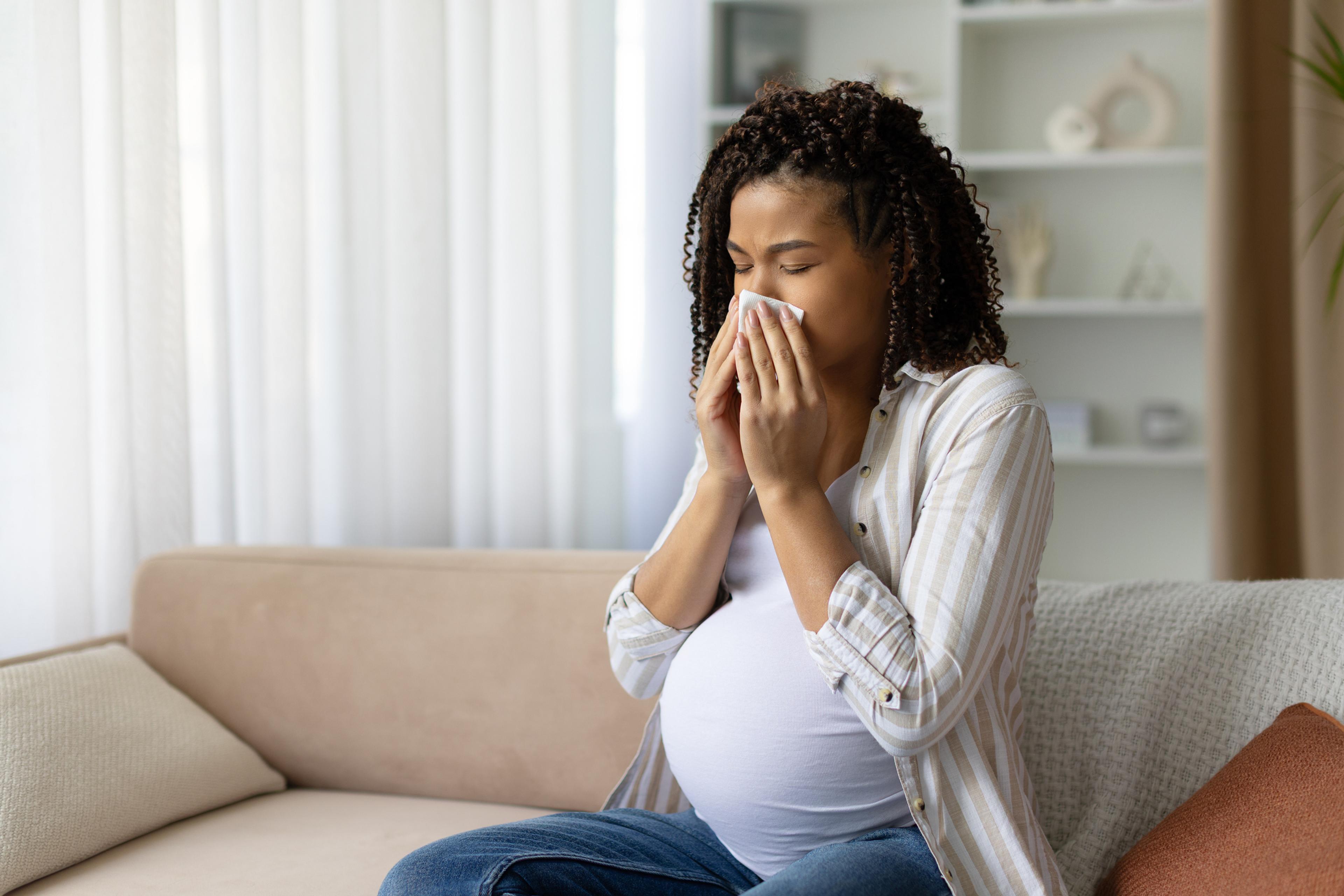
Dealing with allergies on top of the rigors of pregnancy can be quite a task.
And pregnancy means certain medications are off limits, so what can you take to deal with the sneezing, congestion and fatigue from allergies? What is safe to take? Let’s take a look at what allergy medications you can take while pregnant, what not to take and other ways to deal with seasonal allergies.
Antihistamine tablets
The most common over-the-counter allergy medications are antihistamines such as Zyrtec® and Claritin®. These medications block histamine, which the body releases when faced with a foreign protein such as environmental or pet allergies. Histamines cause uncomfortable allergy symptoms such as sneezing, runny nose, nasal congestion and watery eyes. Antihistamine medications block the effects of histamine and provide relief.
These medications are generally safe for pregnancy women, according to the American College of Obstetrics and Gynecologists (ACOG). These drugs include:
- Cetirizine (Zyrtec)
- Chlorpheniramine
- Dexchlorpheniramine
- Loratadine (Claritin)
Antihistamine nasal sprays are another type of allergy drug, but there isn’t enough research to know if they are safe during pregnancy, according to the Cleveland Clinic. It’s best to stay away from this type of nasal sprays.
Decongestants
While oral antihistamines are generally safe, watch out for antihistamines combined with decongestants, such as Claritin-D®. Decongestants such as pseudoephedrine have a small risk of causing birth defects, particularly during the first trimester, according to the ACOG.
Talk to your obstetrician (OB) or primary care provider (PCP) about whether it is safe to use decongestants after the first trimester. Women with high blood pressure should not use decongestants at all during pregnancy because the drugs narrow blood vessels.
Saline sprays or a Neti pot are generally safe, non-medicated remedies to reduce congestion. If using a Neti pot, use distilled or boiled water for the saline solution because tap water can contain contaminants.
Steroid nasal sprays
Steroid nasal sprays are over-the-counter allergy treatments, including Flonase®, Nasonex® and Nasacort®. These drugs are typically safe to use during pregnancy, according to the Cleveland Clinic. Steroid sprays are also safe to use with an oral antihistamine for more severe allergies.
Tips on managing allergies
In addition to medication, here are a few other ways to safely manage allergy symptoms:
- Use a humidifier and/or take a hot shower to relieve congestion.
- Keep windows closed and stay inside as much as you can when pollens are high, particularly in the morning.
- Change your clothing or shower after coming indoors to reduce the spread of pollens.
- Regularly wash your bed sheets and blankets.
- Use HEPA (high-efficiency particulate air) filters for single rooms and disposable filters for whole-house HVAC systems to keep the air clear of allergens and particles.
- Clean and dust your home often.
- Vacuum regularly with a HEPA-filter.
- Keep pets out of your bedroom.
- Eat a nutritious diet and drink plenty of water.
- Try to get more rest as your body is working extra hard with pregnancy and fighting allergens.
Talk to your OB or PCP before taking any medications, including allergy medications, while pregnant. If allergies are still interfering with your daily life even with medications, talk to your health care team about other treatments.
Image: Getty Images
Keep reading: