How Long Does Poison Ivy Last?

Lindsay Knake
| 3 min read
Lindsay Knake is a brand journalist and project plan...
Key Takeaways
- Poison ivy rash is caused by urushiol oil; it usually appears 12 to 48 hours after contact and can linger for two to three weeks, depending on exposure and individual sensitivity.
- Immediate washing with lukewarm water and soap can reduce the severity of the reaction, and avoiding scratching or touching blisters helps prevent infection.
- Over‑the‑counter treatments such as calamine lotion, hydrocortisone cream, antihistamines and cold compresses relieve itching; seek medical care if the rash covers a large area, shows signs of infection or causes breathing difficulties.
You’ve probably heard the phrase “leaves of three, let them be.”
In the summer, avoiding the plant with three green leaves on red stems may be something you learned as a child. But if you like spending time outdoors, you might find you’ve brushed up against poison ivy without meaning to.
Let’s look at poison ivy, symptoms of a poison ivy rash and how long it lasts.
What is a poison ivy rash?
The poison ivy plant is a common shrub or climbing vine that grows in wooded areas and fields.
A poison ivy rash is an allergic reaction to an oil in the leaves of the poison ivy plant. When your skin comes into contact with this oily sap called urushiol, you’re likely to develop an itchy rash. As many as 90% of people who touch poison ivy develop a rash, according to the Cleveland Clinic. Urushiol isn’t poisonous, unlike the name of the plants that carry it, but it is uncomfortable and even painful on human skin.
Symptoms of a poison ivy rash, according to the Mayo Clinic, include:
- Intense itching that starts before the rash
- Patches of redness
- Fluid-filled blisters
If you come into contact with poison ivy, immediately wash the area with lukewarm water and soap to reduce your chances of developing a rash. Be careful not to touch anything with the affected area before washing as the oil can transfer to other body parts, clothing, people, animals and surfaces with a touch. Wash any clothing and surfaces that may have had contact with the oil.
How long does poison ivy rash last?
The rash typically develops 12 to 48 hours after touching the leaves. It can last two to three weeks, and the severity of the rash can depend on exposure and an individual’s sensitivity to urushiol. More oil over more skin will likely result in a larger rash.
Camping, hiking, gardening and working outdoors increases your risk of getting a poison ivy rash. Kids playing outside who aren’t aware they should stay away from it can also be vulnerable.
Teach children how to identify poison ivy and other plants that produce urushiol, including poison oak and poison sumac.
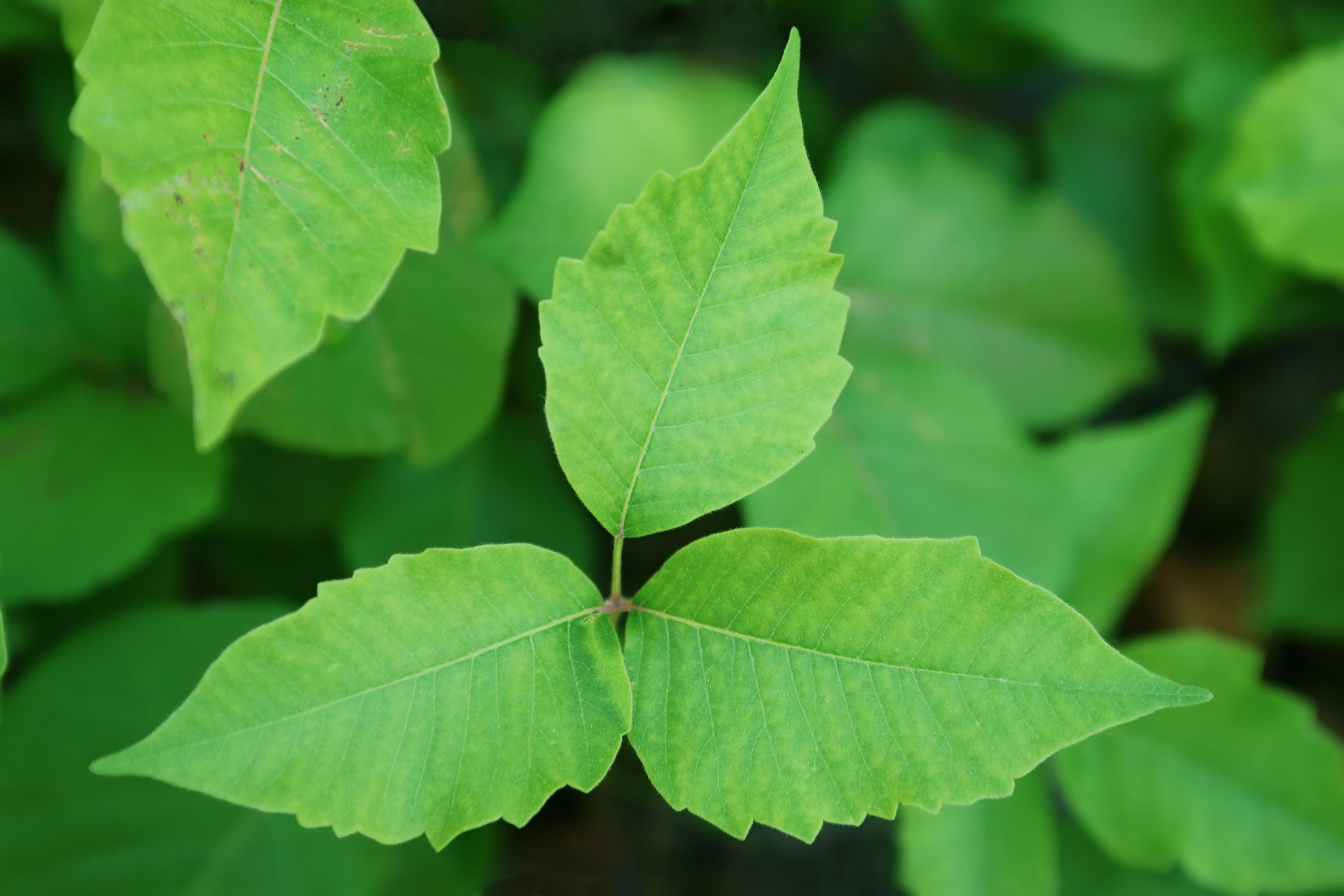
- Poison ivy: a shrub or vine with sharp green leaflets on red stems growing in groups of three
- Poison oak: a shrub with rounded green leaflets on red stems growing in groups of three
- Poison sumac: a tall plant with clusters of seven to 13 smooth leaflets growing in pairs
How to treat poison ivy
Poison ivy generally isn’t dangerous, but it can have side effects. Scratches and popped blisters can become infected without proper treatment. Breathing in burning poison ivy can irritate your airways or cause breathing problems. Seek immediate medical care if you are struggling to breathe after poison ivy exposure.
If you have a poison ivy rash, here are a few things to do:
- Don’t scratch: As tempting as it might be to relieve the itching, this can lead to infection.
- Don’t touch blisters: This will also help prevent infection.
- Apply anti-itch creams such as calamine lotion or hydrocortisone to help relieve the itching
- Take antihistamines to help with the itching.
- Apply a cold compress
- Apply colloidal oatmeal to the affected area.
If the rash is severe, affects more than a quarter of your body or shows sign of fever or infection, talk to your primary care provider (PCP). Additionally, parents should consult with their child’s PCP or pediatrician in the case of a rash to assess the level of allergy or reaction.
Image: Getty Images
Keep reading: