Can Wearing Earbuds Regularly Hurt Your Ears?

Lindsay Knake
| 3 min read
Lindsay Knake is a brand journalist and project plan...
Key Takeaways
- Repeated exposure to sounds above 85 decibels can damage sensitive inner-ear cells, and hearing damage from prolonged or very loud listening is often irreversible.
- Ringing in the ears, muffled hearing, difficulty hearing conversations and trouble understanding speech in noisy environments can all signal hearing loss.
- Keep volume levels at 50% to 60% of maximum, limit listening time at higher volumes, use noise-canceling features when possible and clean earbuds regularly to reduce the risk of infection.
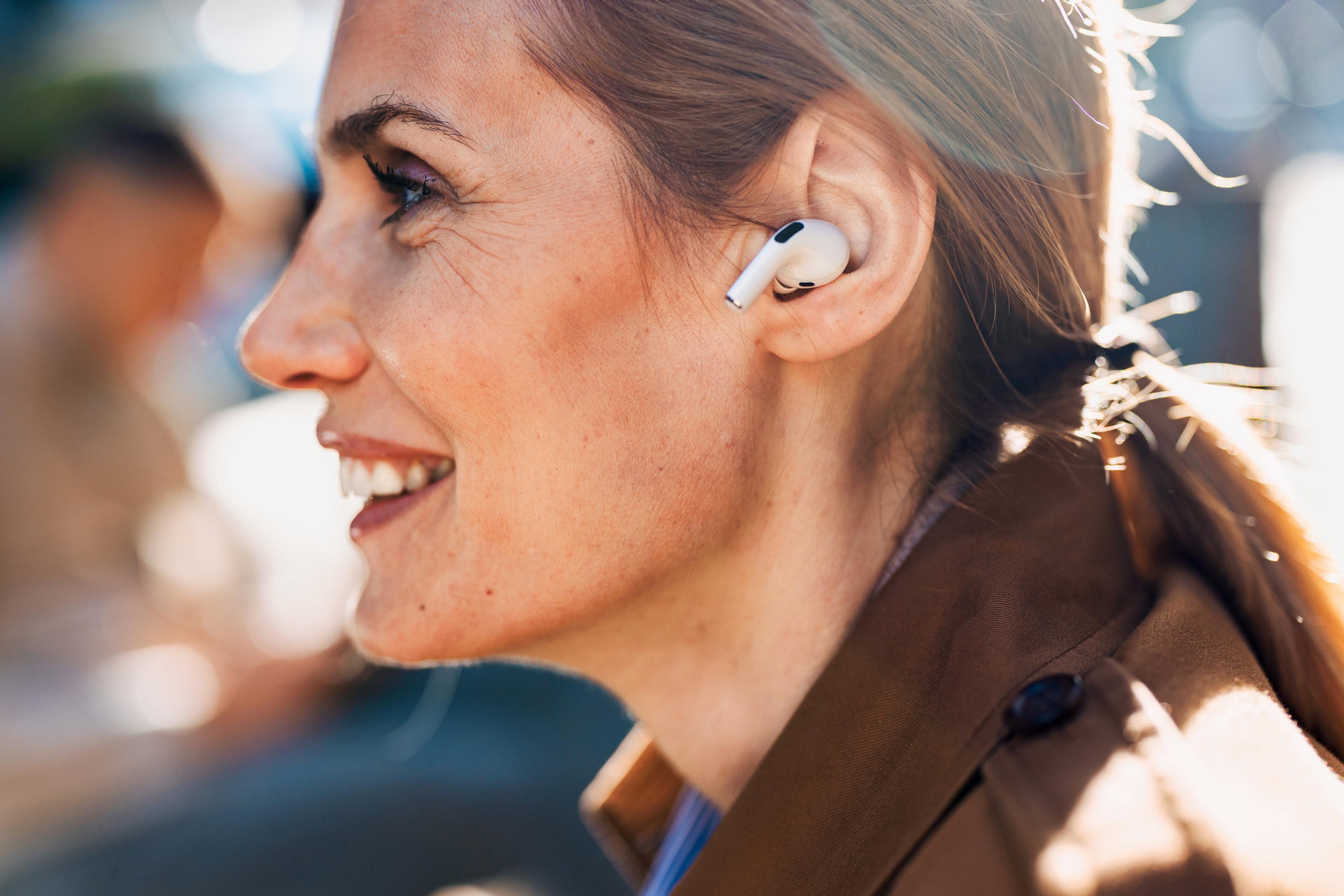
You may not think anything of popping in earbuds at work or on a walk to listen to music or a favorite podcast.
And you probably know loud volumes aren’t particularly great for your hearing. But do you know when noise can lead to permanent hearing loss? Learn more about the risks of wearing earbuds regularly and how to protect your hearing.
Can wearing earbuds regularly hurt your ears?
Earbuds fit inside the ear and can cause irritation or pain if they don’t fit well. Earbuds contaminated with bacteria can also cause infections, according to the Mayo Clinic.
But the main risk with earbuds is sound exposure, according to the University of Rochester Medicine.
Using earbuds or any type of headphones to play music, podcasts or other sounds at high volumes can lead to hearing loss.Sound is measured in decibels (dB), and anything at or higher than 85 dB can damage your hearing with repeated exposure, per the Mayo Clinic. A food blender or a busy roadway are about 85 dB, for example.When noise reaches 100 dB or higher, you can have damage in minutes, per the Cleveland Clinic.
How does this happen? Your inner ear is sensitive and delicate. The cochlea is a cavity in your inner ear that has two fluid-filled chambers lined with tiny hair cells. Special cells in the hairs change sound into electric signals and then carry them on to the brain, which your brain interprets as sound. Damage to these cells is called sensorineural hearing loss, and in most cases, is not reversible.
Signs of hearing loss include:
- Difficulty hearing high pitched sounds
- Ringing in your ears
- Muffled hearing
- Difficulty hearing other people talking
- Difficult hearing in noisy environments
Hearing loss can interfere with your ability to work, maintain relationships and enjoy daily life. Sound exposure can be especially difficult for young people. Hearing loss in children can make learning challenging and make social development difficult, according to the U.S. Centers for Disease Control and Prevention.
How to use earbuds safely
As nice as listening to music on a walk can be, one of the healthiest things you can do for your ears is wear earbuds a little less often and keep the volume down to 50% to 60% of maximum volume when you use them. If you are listening at 80% of max volume, limit listening time to about 90 minutes. Many smartphones have settings to limit volume, reduce loud sounds and provide warnings for sustained, loud headphone audio levels. The World Health Organization recommends devices have a maximum default output set at70 to 85 dB. Make sure your earbuds fit well as poorly fitted devices can lead to you cranking the volume.
Using noise-canceling features in earbuds and other headphones can reduce background noise and allow you to listen to music at lower volumes. You can use the noise-canceling feature in noisy environments to protect your hearing. You can also physically move away from loud sounds and wear ear protection in loud environments such as concerts or during yard work.
Also, clean your earbuds regularly to prevent infection.
The best way to protect your hearing is prevention because most hearing loss is not reversible. If you have signs of hearing loss, talk to your primary care provider about options such as hearing aids.
Photo credit: Getty Images