How to Get Off Your Phone at Night

Lilly DeLano
| 3 min read
Lilly DeLano is a 2026 Corporate Communications Inte...
Key Takeaways
- Turn off screens at least an hour before bedtime; blue light exposure suppresses melatonin and makes it harder to fall asleep.
- Replace phone time with low‑stimulus activities—such as listening to music, watching a calming TV show, journaling or reading—to break the habit and let the brain wind down.
- Establish a consistent evening routine (such as stretching, skincare or meditation) and use a separate alarm clock so the phone stays out of the bedroom, helping the body recognize it’s time for sleep.
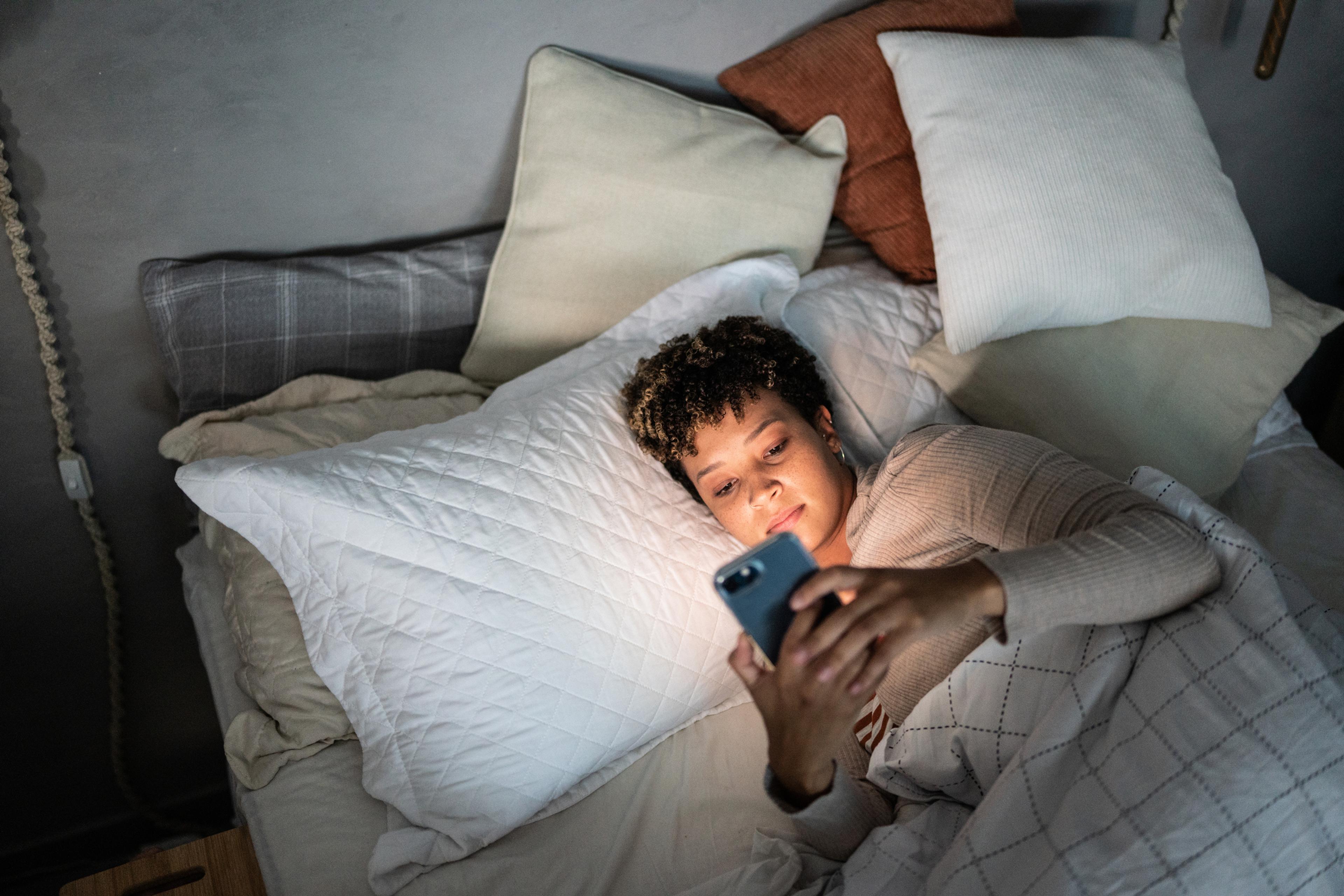
Falling asleep should be one of the easiest parts of your day. Yet it’s something one-third of adults struggle with, per the American Academy of Sleep Medicine, although not for the reasons you might think.
Ever since the development of smartphones and social media, it has become increasingly apparent that heavy screen use affects the brain and behavior and can interfere with sleep, memory and learning, according to a 2020 study published in Dialogues of Clinical Neuroscience Constant. Phone use leads to increased mental stimulation which can trigger your alertness, arousal and stress. This trigger makes it difficult for your brain to wind down and helps prepare for a healthy sleep. In fact, using your smartphone for eight or more hours a day is closely linked to a shorter sleep duration, per a 2020 study published in Nature and Science of Sleep.
Phones and social media are here to stay, and it's important to find tools and habits that can help you disconnect from your phone at night and rest your brain.
Here are some options to avoid using your phone and make falling asleep easier.
Find another distraction
Sometimes the easiest way to stop using your phone is to replace it with something else
According to the Cleveland Clinic, activities like listening to music or watching a comforting TV show can be less disruptive to sleep compared to consistent phone use. Finding another distraction that involves minimum concentration will help you get out of a bad habit of being on your phone.
Over time and continued alternative activities, the urge to reach for your phone will stop.
Turn off your phone
Turn off your smartphones at least one hour before bed. This removes distractions and gives your brain the ability to decompress the information it's been gathering all day.
According to a small 2024 study, blue light from phone screens suppressed melatonin production in young adults, and researchers recommend staying off screens in the hour before going to bed.
Setting a digital curfew for yourself can also help eliminate the need to decide when to turn off your phone. If applicable, find the screen time category in your settings app and set when you would like your phone to turn off.
If you use your phone as an alarm, buy a separate alarm clock to keep your phone out of your bedroom.
Have a bedtime routine
Creating an evening routine can help your body and mind relax. Here are a few ideas to add to a routine:
Journaling in particular increases the neural activity in the brain, helps organize thoughts, improves memory and releases anxiety. Getting the thoughts out of your head and onto paper can relax your brain and slow your thoughts, making falling asleep more achievable.
Reading is a great habit to get into before bed. It can strengthen your brain, lower stress and tire your eyes, making it easier to fall asleep.
Unlike a phone, reading doesn’t overstimulate your brain and might be the best replacement for phone use at night.
What’s most important is that you find a routine that works for you. When you reach to use your phone at night, remind yourself that doomscrolling can delay REM sleep and disrupt your rest schedule, which can have a negative effect on your health.
Image: Getty Images
Read on: