Community Grant Helps Bring Healthcare, Support and Independence to Older Adults Across Washtenaw County

Jake Newby
| 4 min read
Jake Newby is a brand journalist for Blue Cross Blue...
Key Takeaways
- About 75% of older adults served by WISE Services earn less than $25,000 annually, making healthcare access and affordability significant challenges.
- A $25,000 BCBSM Foundation grant helps WISE deliver in-home occupational therapy and nutrition services directly to older adults.
- Licensed occupational therapists and dietitians provide personalized guidance that helps seniors improve safety, nutrition, mobility and independence at home.
- Early program results show home modifications, adaptive equipment and caregiver support can reduce fall risks and improve quality of life.
Roughly 75% of older adults who are clients of JFS in Washtenaw County earn less than $25,000 a year. That income is tough to live on, let alone pay for crucial healthcare services as these individuals age.
That statistic is courtesy of Jewish Family Services (JFS) of Washtenaw County, an organization that deploys an aging and caregiver support program known as WISE Services. Regardless of a client’s religion, WISE Services provides care management, transportation, occupational therapy (OT), nutritional therapy and many other services aimed at improving the health and quality of life for older adults in Washtenaw County.
“There’s a lot of complexity now in how to access services,” said Jill Kind, Senior Director of WISE Aging Services and a Clinical Social Worker with JFS of Washtenaw County.“ Everything is harder as you get older and everything’s expensive, so our goal really is to keep people safe at home and as independent at home as they can possibly be.”
Part of keeping people safe and healthy as they age – especially with barriers like transportation and income in mind – involves bringing services to them. A $25,000 Blue Cross Blue Shield of Michigan (BCBSM) Foundation Community Health Matching Grant has helped WISE pilot its OT and Registered Dietician (RD) services program.
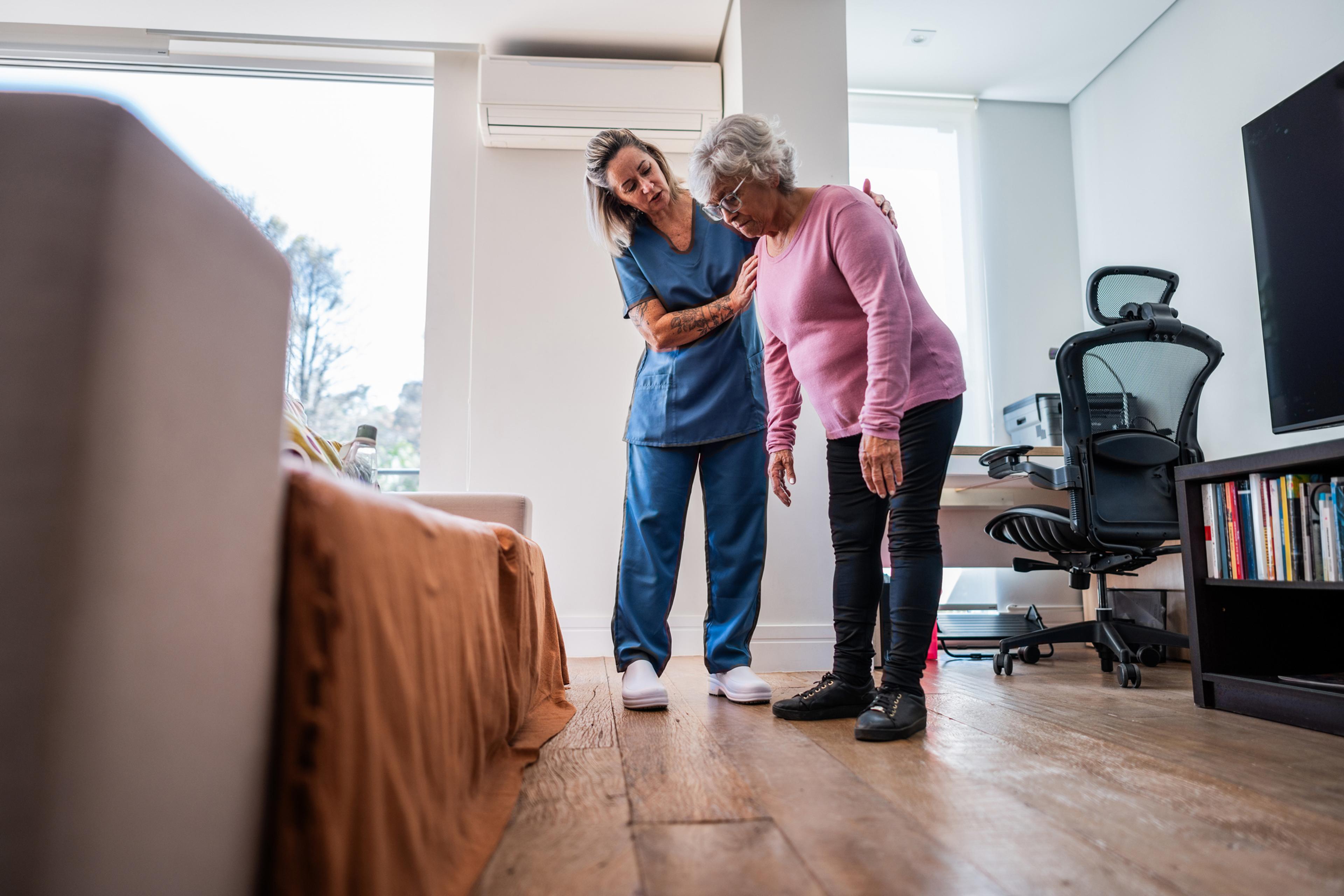
This year, approximately 20 clients will receive visits from licensed healthcare professionals who assist them with everything from self-care routines and falls prevention tips to dietary guidance and cooking tips to help them prepare quick, nutritious meals.
Kind said the in-home element of care is not only important to circumvent barriers to access, but to give OTs and RDs the opportunity to provide hands-on, in-person coaching, in the setting these people live in every day.
“A dietician can help them learn to prepare simple meals that have less salt and aren’t as processed and provide some tips to make meals both healthy and good tasting,” Kind explained. “An occupational therapist can examine how they are moving, how they are eating, how they are getting from room to room, how they get out of bed. Seeing those things gives our staff a much better sense as to what can actually help, compared to just telling them about it.”
A real-life success story: How the program has made a difference thus far
WISE recently began working with a caregiver and her father, who has Parkinson’s disease and struggles with falls. The organization referred them to a JFS home modification program that made it easier for the man to navigate his home without falling. WISE also provided everyday lifestyle tips designed to ease the caregiver’s burden.
“The thought was, if she doesn’t have to feed him because he learns a new technique, that is a huge relief for her,” Kind said. “And, it means a lot to him, he doesn’t want anyone else to feed him. He wants to maintain his independence and doesn’t want to be thought of someone who needs help every second of the day.”
Installing motion-based lights, providing the man with a bed cane and supplying specially made silverware and dishes may sound like minor additions, but they’ve played a huge role in making life easier on both the caregiver and her father. These are the types of services and resources WISE OTs provide, in addition to nutritional counseling.
“Aging comes with unique challenges, but every older adult deserves the opportunity to live safely and independently for as long as possible,” said BCBSM Foundation Senior Program Officer, Dr. Melissa Boguslawski. “Jewish Family Services of Washtenaw County helps expand access to services that meet people where they are and keep them from spending money on healthcare services they cannot afford. We’re proud to support this pilot program and are excited to see it grow.”
Kind says the Community Health Matching grant has given WISE services the freedom to pilot new approaches, which has been important because things haven’t always gone to plan so far this year. The organization initially thought it could visit a client’s home once, observe how they live and accommodate the necessary services, but Kind said she learned early on that people needed multiple visits to build a relationship and complete a more accurate assessment.
This grant has allowed WISE Services to learn and grow on the fly.
“What’s really meaningful for us is, this is the kind of grant where we can try stuff out,” she said. ‘We work on such a tight budget that sometimes we aren’t able to test an approach before implementing it. So, if we can try something, revise it, get input from older adults, benefit from that learning, and do it again better, that’s really meaningful. And I think that’s what this grant offers to us as an organization.”
Learn more about the BCBSM Foundation’s Community Health Matching grant program by clicking here. And click here to learn more about the community-driven solutions BCBSM funds to address healthcare affordability for all.
Photo credit: Getty Images
More Foundation stories: