Study: Increased Screen Time Linked to Lower Test Scores Among Children

Jake Newby
| 4 min read
Jake Newby is a brand journalist for Blue Cross Blue...
Key Takeaways
- Children in the United States average nearly eight hours a day of screen time.
- A new study found that kids who spent more time on screens scored lower on standardized reading and math tests compared to kids who used screens less or not at all.
- Other research discovered that preteens using increasing amounts of social media registered lower reading, vocabulary and memory test scores compared to kids who use little to no social media.
- Limiting screen time early is easier than trying to get kids to stay off screens later, as it is considered a progressive habit.
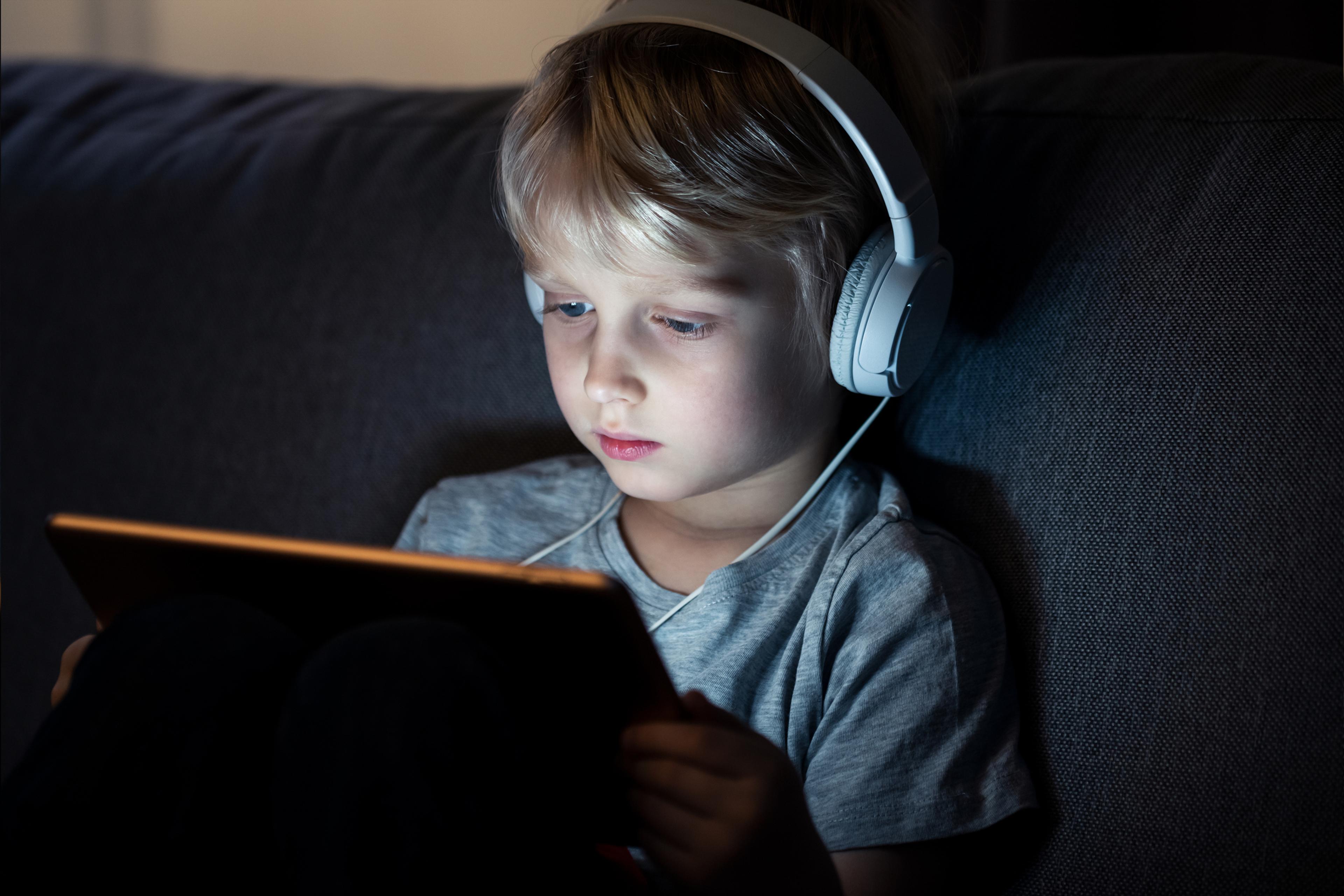
More screen time in early childhood is associated with lower test scores, according to a new large-scale study tracking screen use of elementary school students in Canada. The research – published in the Journal of the American Medical Association (JAMA) in October – highlights the importance of early interventions to promote healthy screen habits among kids.
In the new study, parents reported the daily screen time of their third- and sixth-grade children. They learned that kids who spent more time on screens – especially watching television or using social media – scored lower on standardized reading and math tests compared to kids who used screens less or not at all. The study found that each additional hour of daily screen time was linked to about a 10% lower chance of achieving higher academic levels on reading and math tests.
Children in the United States average nearly eight hours a day of screen time, according to the American Academy of Child and Adolescent Psychiatry. This includes phones, tablets, TVs, computers and gaming consoles.
How does excessive screen time impact childhood development?
The JAMA study is one of the latest in a long line of studies to link excessive screen time to poor academic outcomes among children. A 2023 study found that too much screen time – especially when multitasking – is associated with worse executive functioning and lower academic performance.
The same study found multitasking with social media to be particularly problematic, as children who made a habit of rapidly switching between apps and screens were more strongly associated with negative cognitive outcomes.
Further illustrating the link between increased social media use and poor academic outcomes, a separate new 2025 study published by JAMA found that preteens using increasing amounts of social media registered lower reading, vocabulary and memory test scores compared to kids who use little to no social media. Even low but increasing social media use was linked to worse cognitive performance later, according to this study.
There is also a link between ample screen time and limited physical activity among kids. In children age 5 and younger, too much screen time and not enough active playtime can limit their motor skill development and curiosity, according to the Cleveland Clinic.
What are other negative effects of too much screen time?
In addition to impaired learning and poor academic performance, too much screen time can lead to health problems for anyone – not just kids – including weight gain, irregular sleep and poor mental health. It can cause eye issues related to digital eye strain, also known as computer vision syndrome. Symptoms of digital eye strain include:
- Blurred vision
- Dry eyes
- Headaches
Increased screen time can also increase a child’s risk of developing myopia, which is nearsightedness, and can create difficulty seeing objects far away. Myopia usually becomes an issue for children between the ages of 6 and 14.
It is important to remind children to take a break from their screens. The American Optometric Association recommends the 20/20/20 rule: look away from the screen every 20 minutes and focus on an object at least 20 feet away, for at least 20 seconds.
Parents should consider weighing the productivity of doing schoolwork with the hours of screen time necessary to do so. Implementing offline activities into your child’s schedule to prioritize their eye health is important.
Tips for parents to help children reduce screen time
The American Academy of Pediatrics offers these recommendations for screen time, by age:
- 18 months and younger: minimal or no screen time
- Age 2 to 5: less than an hour a day
- Age 5 and older: screen time should not displace sleep, exercise, schoolwork or family time
Limiting screen time early is easier than trying to get kids to stay off screens later; it is a progressive hobby and habit, as indicated by a recent Pew Research Center study that found social media use to increase the later a teen got into adolescence.
More time on devices typically means less time spent on other activities that might be more beneficial to a child’s development. Offering physically and mentally enriching activities to infants, toddlers and children can aid their development in a healthy way while helping them practice moderation with screens. Here are a few tips for parents:
- Stop the use of screens an hour before bed
- Offer physical toys that encourage curiosity
- Read books with kids
- Turn off background TV
- Avoid screens during mealtimes
- Co-view movies and TV shows with kids
- Have media-free time with family and friends
- Encourage screen-free activities such as sports and active play
- Set a good example with phone and screen use
- Talk to their kids about media and screens
- Make a family media plan
- Be consistent with screen time and family rules
Related:
Photo credit: Getty Images