

Holiday burnout is real.
The holiday season can bring a lot of added stress and anxiety: about 43% of people say the holiday season interferes with their ability to enjoy them, according to a Harris Poll survey. Meanwhile, 9 out of 10 people say concerns like not having enough money, missing loved ones and anticipating family conflict cause them stress this time of year.
It’s common for people to feel pressured to take on more responsibilities or tasks to meet the expectations we place on ourselves, or that we take on from others.
This type of over-commitment can lead to exhaustion, especially when added to the everyday stresses and anxieties of modern life. Increased worries about money are also common during this time of year, when there’s an emphasis on providing gifts and big meals. The holidays can also be emotionally charged – as strained family relationships or the loss of a loved one can make the season more difficult to manage.
For people that struggle saying “no” or are “people-pleasers,” the holiday season can also bring feelings of guilt about attending events or activities.
The holidays can also take people out of their normal routines, which means engaging in healthy habits and mental health strategies may not be as easy or predictable. Another unofficial medical term to describe these feelings of stress and overwhelm is "holiday fatigue."
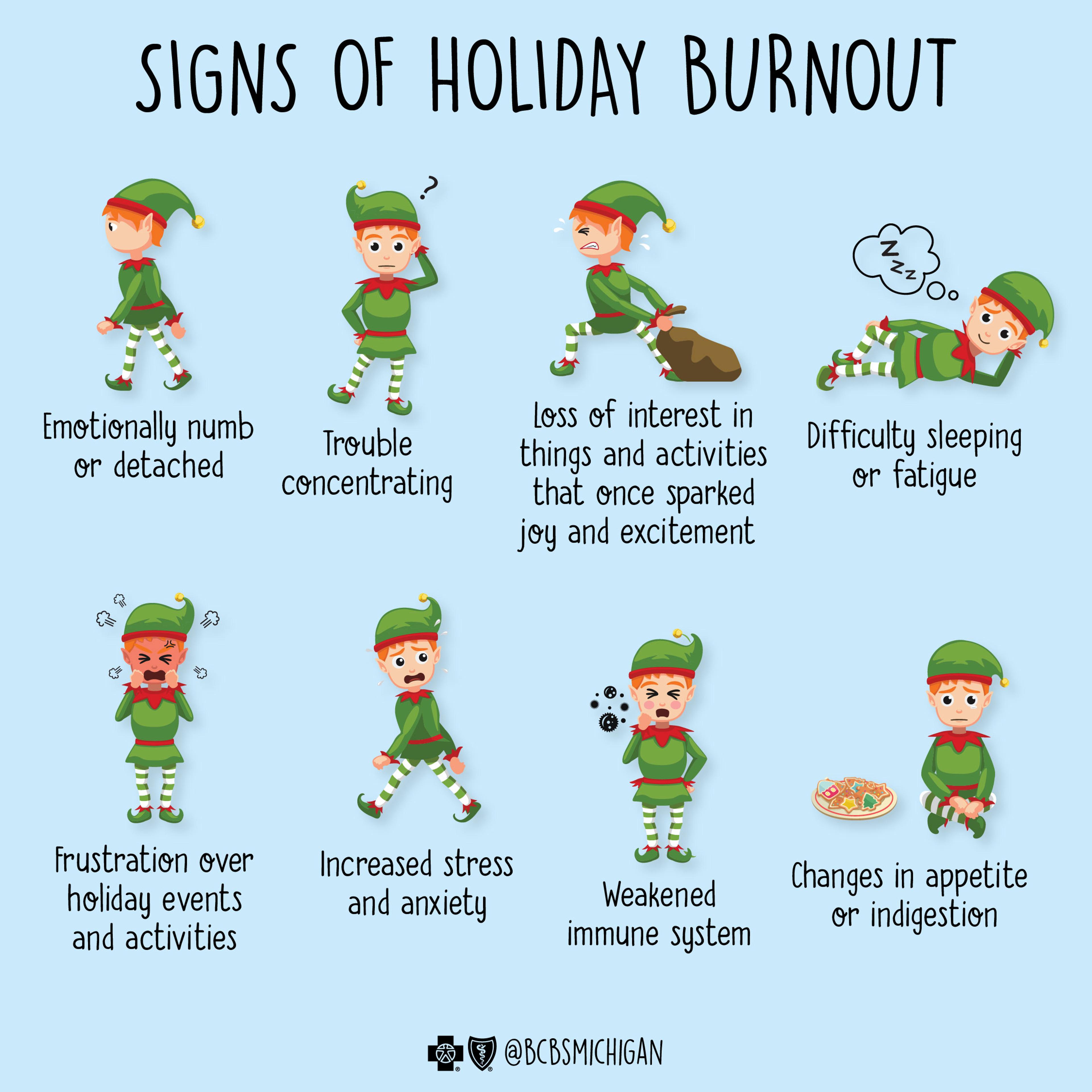
What holiday burnout and holiday fatigue looks like
Stress can often drive individuals to over-commit and over-engage during the holiday season; but too much stress can lead to Christmas burnout and holiday burnout, which is often characterized by becoming disengaged.
Here are some "holiday fatigue" symptoms and signs that indicate you may be experiencing burnout this holiday season:
- Changes in appetite or indigestion
- Difficulty concentrating
- Difficulty sleeping
- Emotionally numb or detached
- Fatigue
- Frustration over holiday events and activities
- Increased stress and anxiety
- Loss of interest in things and activities that once sparked joy and excitement
- Weakened immune system
How to cope with holiday burnout
Experiencing burnout during the holiday season doesn’t mean you’re a bad person – or that your holiday season is ruined. It means your expectations are too high, and you’re overcommitting yourself beyond your capacity. It’s important to re-assess your situation before burnout and chronic stress leads to unhealthy coping behaviors and damage to your physical and mental health.
Here are some strategies to try to address holiday burnout:
- Make a list of priorities: Get organized by putting events and obligations into a calendar. Then, make a to-do list and prioritize what needs to be done each day. What’s a priority for you might not be a priority for someone else, and that’s OK. Make sure to include in your daily list time for self-care and exercise.
- Stick to a routine: Going to bed and getting up at the same time each day will help you better regulate your sleep schedule, putting you on a track for success to accomplish your to-do lists. Exercising regularly and eating meals at mealtimes will also keep yourself in a routine and help stabilize your body and mind to focus on the tasks at hand.
- Make boundaries: As you’re making your priority lists, be honest with yourself instead of ambitious. Seta boundary by saying “no” to anything that will pull you away from your priorities and routine.
- Ask for help: If you’re feeling overwhelmed, ask for help with tasks at work or around the house. Burnout can be difficult to overcome alone. Mental health professionals can help you sort through your stress to create a strategy to address it and improve your life so you can enjoy the holidays with friends and family.
Blue Cross Blue Shield of Michigan and Blue Care Network can help members find an in-network mental health professional by calling behavioral health access lines listed below:
PPO: Behavioral Health Access Line | 1-800-762-2382
- A free and confidential resource that’s just a call away when you need immediate support. Behavioral health professionals answer, 24/7.
HMO: Behavioral Health Access Line | 1-800-482-5982
- Connect with a behavioral health clinician if you need help finding a mental health or substance use provider.
- Behavioral health clinicians are available for routine assistance from 8 a.m. to 5 p.m., Monday through Friday. For urgent concerns after hours, clinicians are also available 24 hours a day, seven days a week.
Learn more about mental health and options you have as a member to seek help at bcbsm.com/mentalhealth.
Related:
Photo credit: Getty Images