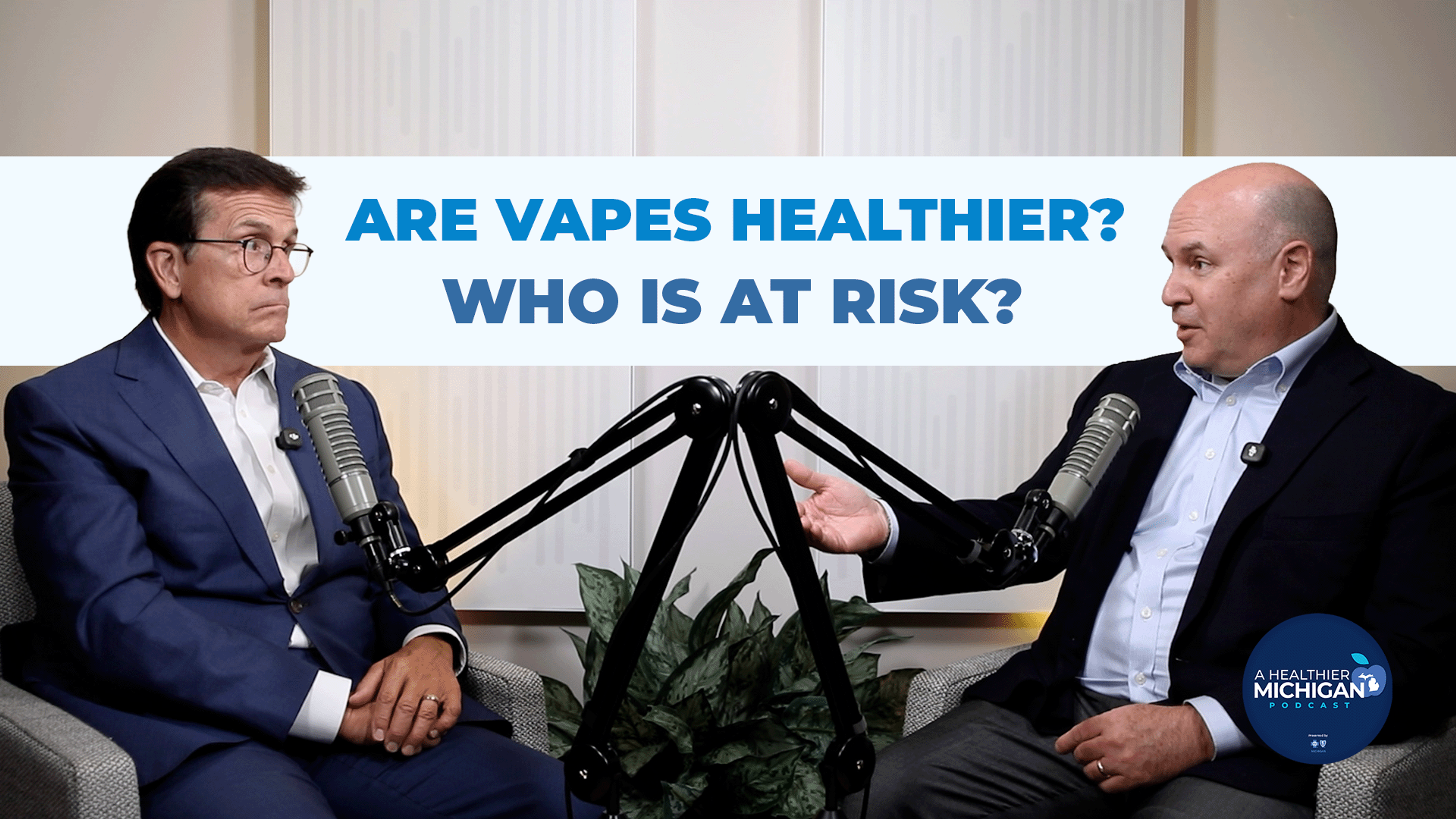
Vape devices may be small and sleek, but the aerosol they produce can carry substances into the lungs and bloodstream. On the A Healthier Michigan Podcast, host Chuck Gaidica talks with Dr. Peter Graham, associate chief medical officer at Blue Cross Blue Shield of Michigan, about the health risks of vaping and why teens may be especially vulnerable to e-cigarettes.
What are the health effects of vapes?
A vape uses a battery-powered heating element to turn liquid into an aerosol of tiny particles. While the cloud may look like smoke or steam, Graham said it can contain nicotine, flavoring chemicals and particles from the device itself, including plastics and heavy metals. These substances are not meant to be inhaled and may irritate or damage lung tissue.
The potential effects do not stop at the lungs. Some particles can enter the bloodstream and affect blood vessels and other organs, including the brain. Graham said vaping can expose users to hot aerosol as well as chemicals, and devices with lithium-ion batteries can overheat, causing fires and burns. Inhaling certain substances may also trigger severe lung inflammation. Such cases are uncommon, he said, but can be life-threatening.
How vaping affects teens
The long-term effects remain uncertain because vaping has not been studied over as many decades as cigarette smoking. That uncertainty is particularly important for adolescents: The brain continues developing into a person’s early to mid-20s, and researchers do not yet fully understand nicotine’s effects on that development.
Flavored products and colorful packaging can appeal to young people, while nicotine’s addictive properties, social influences and the habit of holding and using a device can make vaping compelling. Graham cautioned against viewing vapes as harmless or as a safe alternative to smoking. Some evidence suggests vaping may lead people who otherwise would not smoke to begin using tobacco. However, nicotine replacement products such as patches, gum and lozenges are evidence-based tools for adults seeking to quit, ideally with a plan to taper under medical guidance.
For parents, Graham recommended calm, open conversations rather than judgment. Listen, share what is known and acknowledge what remains uncertain. Parents who smoke can also use the discussion as an opportunity to seek support for quitting; parental smoking is a strong predictor of whether a young person will smoke.
People concerned about vaping can talk with a family doctor or pediatrician. Graham also pointed listeners to information from the Centers for Disease Control and Prevention and mibluedaily.com. His central message: Vaping is not risk-free, and appealing flavors or packaging do not make inhaled aerosol safe.
Listen to the podcast, Is Vaping Safer? Why Teens Are At Risk, to hear the entire conversation. A Healthier Michigan Podcast is brought to you by Blue Cross Blue Shield of Michigan.