You might hear about "whole" foods and wonder what that word really means.
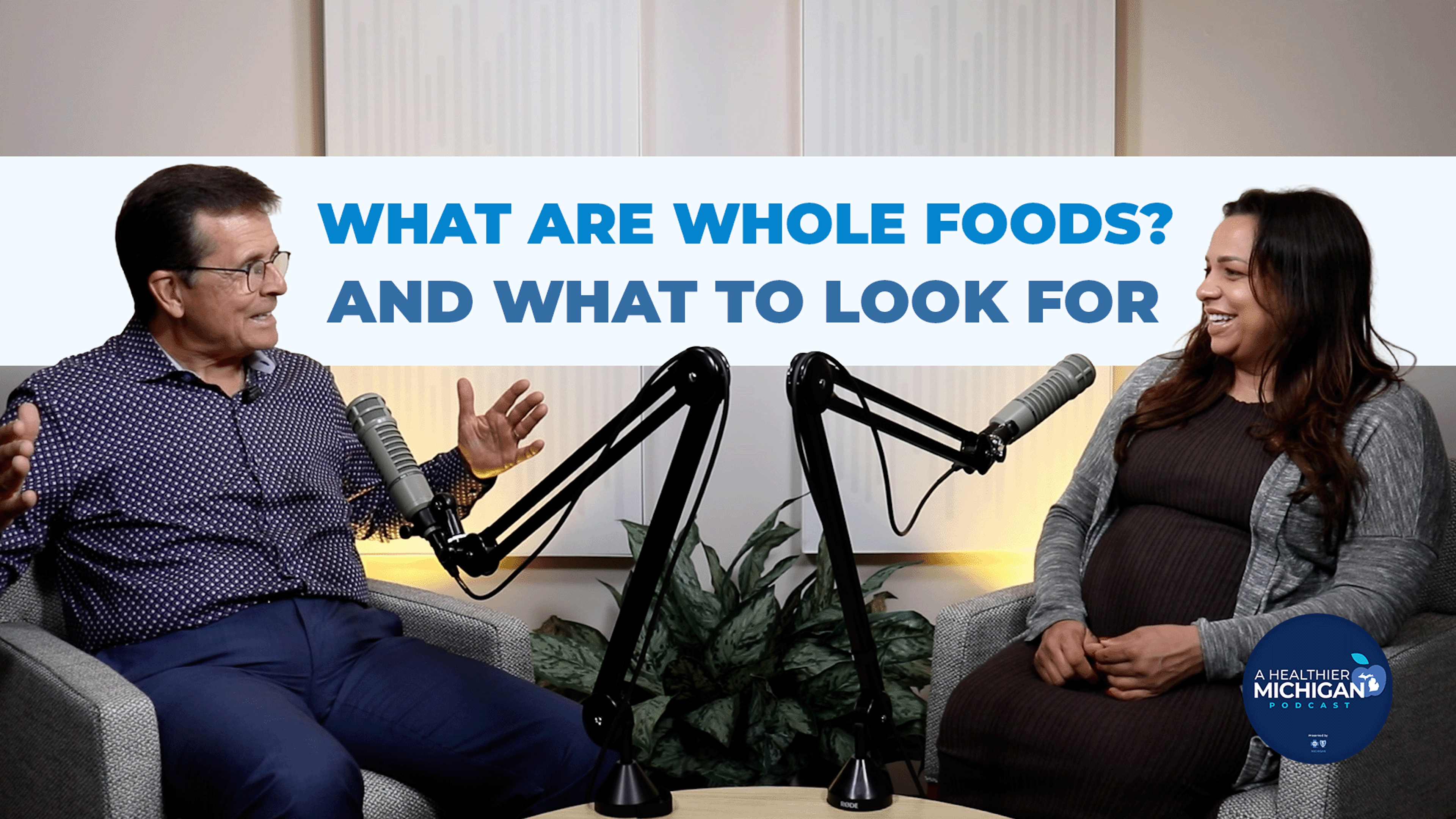
In the latest episode of the A Healthier Michigan Podcast, host Chuck Gaidica and Blue Cross Blue Shield Registered Dietitian Shanthi Appelö dive into the world of whole foods, tackling the confusion surrounding processed foods and offering practical tips for healthier eating.
What does it mean to eat more whole foods? Appelö explains whole foods are unprocessed or minimally processed, such as fresh fruits, vegetables, eggs and meats. She shares the NOVA classification system, which categorizes foods into four groups based on their level of processing. While group one includes foods in their natural state, group four is reserved for ultra-processed products packed with additives, preservatives and ingredients you would never find in nature.
Appelö emphasizes that not all processed foods are bad. For example, canned vegetables or homemade chicken nuggets can be nutritious. The key difference lies in how much a food resembles its original form and the number of added ingredients. Ultra-processed foods like store-bought cakes, sodas and many packaged snacks often contain added sugars, unhealthy fats and artificial additives designed to make them tastier and more shelf stable.
For busy families, Appelö says frozen or canned fruits and vegetables are healthy options, especially when fresh is not available. The most important thing is to choose options that are convenient and budget-friendly while steering clear of products with long lists of unfamiliar ingredients.
The conversation also covers beverages, with Appelö cautioning against sugary sodas and energy drinks, which are considered ultra-processed. She suggests hydrating with water or drinks with few ingredients and saving sweetened beverages for special occasions.
Appelö warns diets high in ultra-processed foods are linked to serious health concerns, including heart disease, diabetes, and even depression. Her top tip: With every meal, aim to include at least one whole food, such as a serving of fruit, vegetables or lean protein.
You can be healthier with simple, sustainable changes to your diet. Swapping out ultra-processed foods for more whole foods does not have to be overwhelming, and the health benefits are well worth it.
Listen to the podcast, What Are Whole Foods? And What To Look For, to hear the entire conversation. A Healthier Michigan Podcast is brought to you by Blue Cross Blue Shield of Michigan.